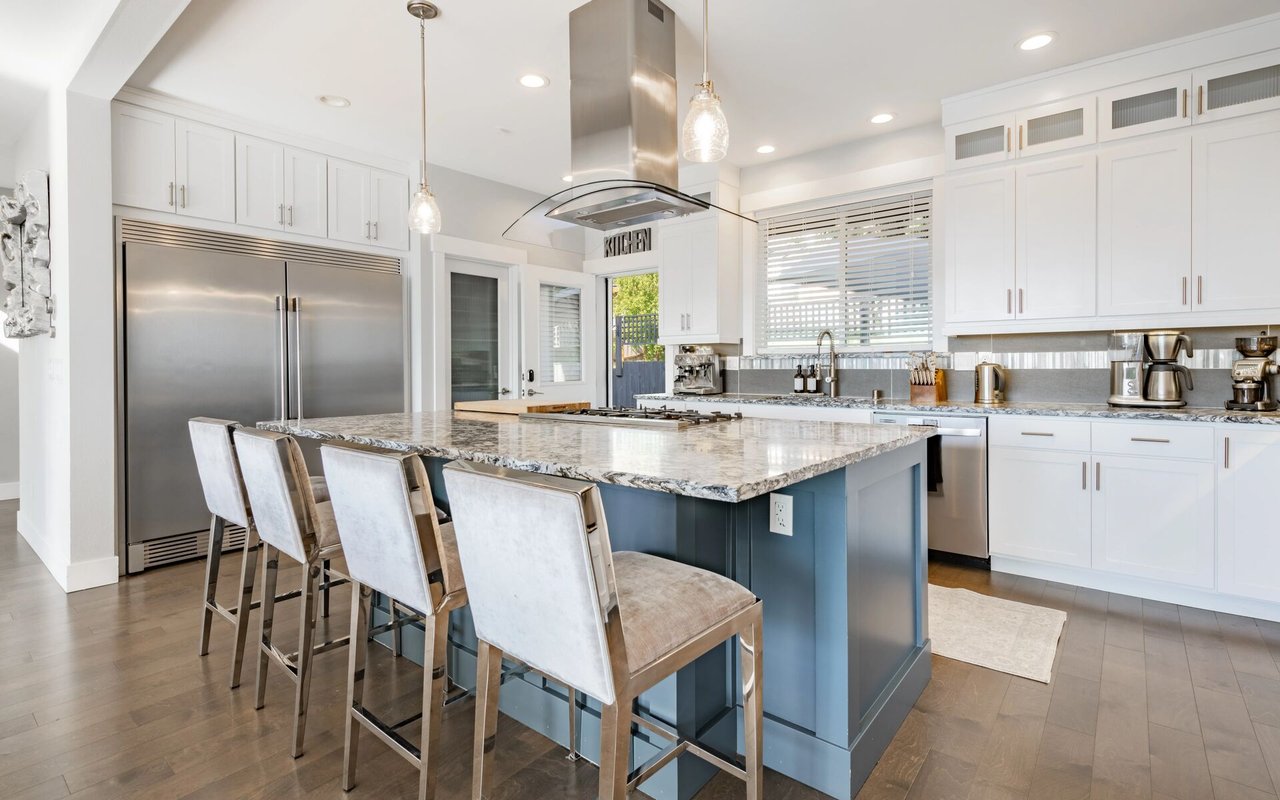
Type "homes for sale 08742" into a search bar and you'll get a strange result: a three-bedroom cape asking $650,000 sitting a few results away from a new-construction home asking $1.6 million, both labeled the same ZIP code, both technically "Point Pleasant." Nothing in that search tells you why the gap exists. It isn't a pricing error and it isn't one town having a good year and a bad one at the same time. It's two separate municipalities, each with its own government and its own housing stock, filed under a single ZIP code that was never built to keep them apart.
That ZIP is 08742, and it covers Point Pleasant Beach, Point Pleasant Borough, and stretches into Bay Head and part of Brick Township as well. If you're comparing listings, pulling comps, or just trying to figure out what a fair price looks like, treating "Point Pleasant" as one market is the fastest way to misread what you're actually looking at.
Two Towns, One Mailing Address
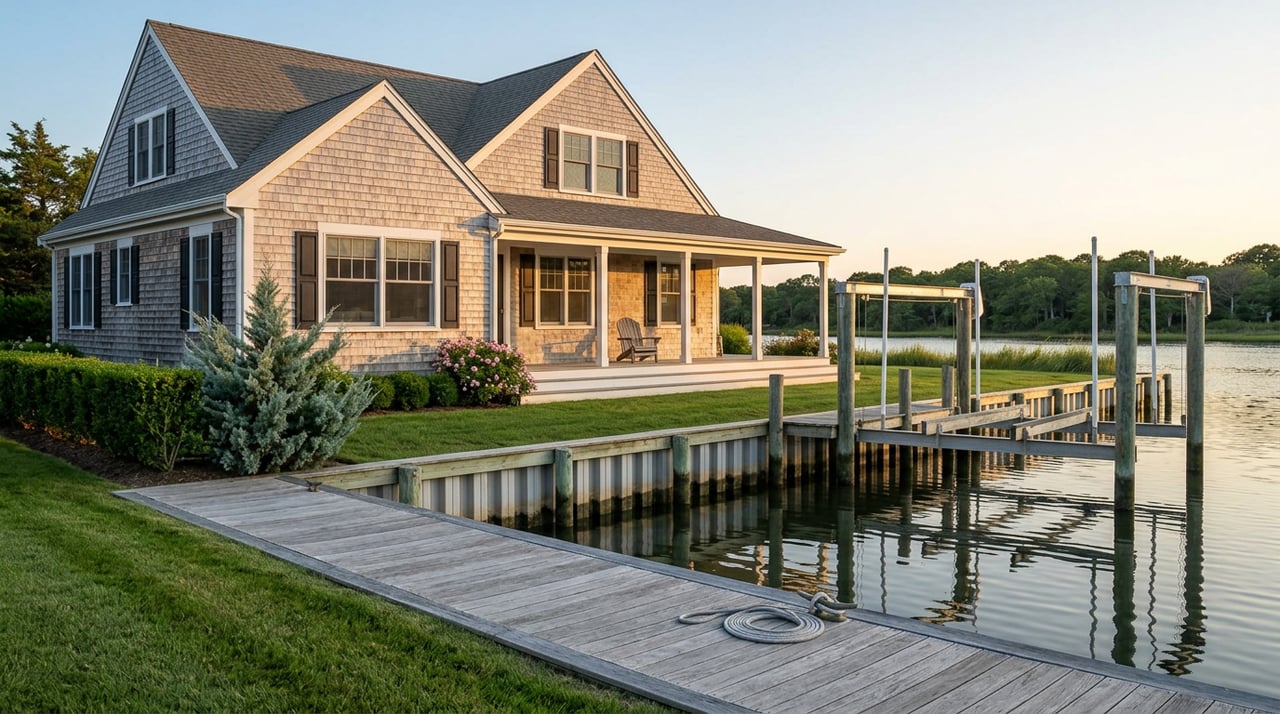
Point Pleasant Borough sits inland, built around the Manasquan River and a network of lagoons and canals. It's home to somewhere around 19,000 year-round residents spread across roughly 3.5 square miles, and it runs at the same pace in January as it does in July. This is a boating town first: driveways with a boat parked next to the car, backyards that end at a bulkhead instead of a fence.
Point Pleasant Beach is a different animal entirely. It's a compact oceanfront borough of about 1.7 square miles and roughly 5,000 year-round residents, built around the boardwalk and a summer season that swells the population well beyond that number. It has its own borough government and its own school district, completely separate from the Borough's.
Two towns, two economies, two reasons someone moves there. The only thing they share on paper is a ZIP code, and that shared ZIP is doing more damage to a buyer's understanding of the market than most people realize.
The Same Month, Two Very Different Numbers
Here's where it gets useful. In February 2026, two widely used home-price trackers each reported a median sale price for Point Pleasant Beach. One put it at $1.7 million. The other put it at $1,349,000. That's a $350,000 gap, in the same town, for the same month.
The reason isn't a disagreement about what a house is worth. It's sample size.
| Tracker | Feb 2026 median sale price | Homes sold that month |
|---|---|---|
| Redfin | $1.7 million | 2 |
| Movoto | $1,349,000 | 25 |
When a tracker counts two closed sales, the median is just an average of two houses, and if one of them happens to be an oceanfront new build, the number swings hard. When another tracker counts 25 sales in the same window, the number settles closer to what a typical buyer actually paid. Neither is wrong. Both are accurate reflections of a very small, very thin market where a handful of transactions can move the headline number by six figures in either direction.
Compare that to the Borough in the same month. Redfin recorded a median sale price of $753,000 off 12 closed sales, with homes moving in about 17 days. That's still a fast market, but it's a market with enough monthly volume that the number doesn't lurch around from one closing to the next. By September 2026, Borough listings were carrying a median asking price closer to $880,000, a reminder that list price and sold price are two different measurements and worth keeping separate when you're sizing up what something will actually cost.
The takeaway isn't that one town's data is more trustworthy than the other's. It's that a median sale price is only as stable as the number of sales behind it, and in a small oceanfront market like the Beach, that number can be worth listing right next to the price itself.
The Real Dividing Line Isn't the Town Border, It's the Water
Once you stop treating "Point Pleasant" as one market, a more useful pattern shows up: the meaningful split isn't Borough versus Beach at all. It's water access.
Inside the Borough, most homes are standard interior properties in that $700,000 to $900,000 range. But homes that back directly onto the lagoons and canals, the ones with a private dock or a boat lift, sit in a completely separate tier, commonly $1.3 million and running well past $2 million. That's not a modest premium. It's a different product being sold under the same town name, and it happens to land in almost exactly the same price range as a Beach oceanfront home or an inland Beach street.
Boats moving through the Point Pleasant Canal pass under a lift bridge that opens to let marine traffic through, connecting the Borough's lagoons to the Manasquan River and, from there, out to the open Atlantic through the Manasquan Inlet. That infrastructure is the entire reason the lagoon tier commands what it does. A buyer isn't paying for square footage there. They're paying for a straight shot to the ocean without ever crossing into the Beach.
So the honest comparison isn't "what does Point Pleasant cost versus Point Pleasant Beach." It's "what does deep-water access cost versus walking distance to sand," because both towns have a version of the premium tier and both towns have a version of the everyday tier, and the town line has almost nothing to do with which one you're looking at.
What This Means If You're Actually Shopping
If you're comparing two listings that both say "Point Pleasant" in the address, the first question worth asking isn't the price. It's which municipality you're actually in, because that determines which government, which tax structure, and which set of local rules apply to the home you're about to buy.
The second question is water access. A home two blocks from a lagoon and a home directly on one are not comparable, even if they're both technically in the same borough. The premium isn't about location on a map. It's about what's physically attached to the property.
The third is sample size. If someone hands you a median price for the Beach and presents it as a settled fact, ask what month it covers and how many sales built it. A number built from two or three closings tells you far less than one built from twenty, and in a market this small, that distinction matters more than it would almost anywhere else in Ocean County.
None of this means one town is the better buy. Families who want deep-water access and a boat in the backyard twelve months a year are shopping for something different than someone who wants to walk to the boardwalk in July. Both are legitimate reasons to buy here. But the ZIP code isn't going to tell you which one you're looking at, and the median price alone won't either.
If you're trying to make sense of a specific listing, or you want someone to pull comps that actually match the home you're considering instead of a blended ZIP-wide average, I'm happy to walk through it with you. Brenda Weld has spent years working buyers and sellers through exactly this kind of Jersey Shore detail, and a second set of local eyes on a confusing search is often the fastest way to figure out what you're really comparing. Let's Connect.
This article is general information, not legal, tax or financial advice. Consult a qualified professional about your situation.